Taken But Not Fosaken
  • Home
  • Blog
  • All Books
    • New Releases
      • Kindle
      • Print
    • Upcoming
      • Kindle
      • Print
    • By Title
      • Kindle
      • Print
    • By Author
      • Kindle
      • Print
  • Romantic Suspense
    • New Releases
      • Kindle
      • Print
    • Upcoming
      • Kindle
      • Print
    • By Title
      • Kindle
      • Print
    • By Author
      • Kindle
      • Print
  • Mysteries
    • New Releases
      • Kindle
      • Print
    • Upcoming
      • Kindle
      • Print
    • By Title
      • Kindle
      • Print
    • By Author
      • Kindle
      • Print
  • Reviews
    • By Title
    • By Author
  • Authors
    • Bios
    • Interviews
  • About
    • Privacy Policy
    • Cookies Policy
    • Contact Us
    • Blog
  • For Authors
Lost Cause

Donn Taylor Interview

February 2, 2015 By The Suspense Zone

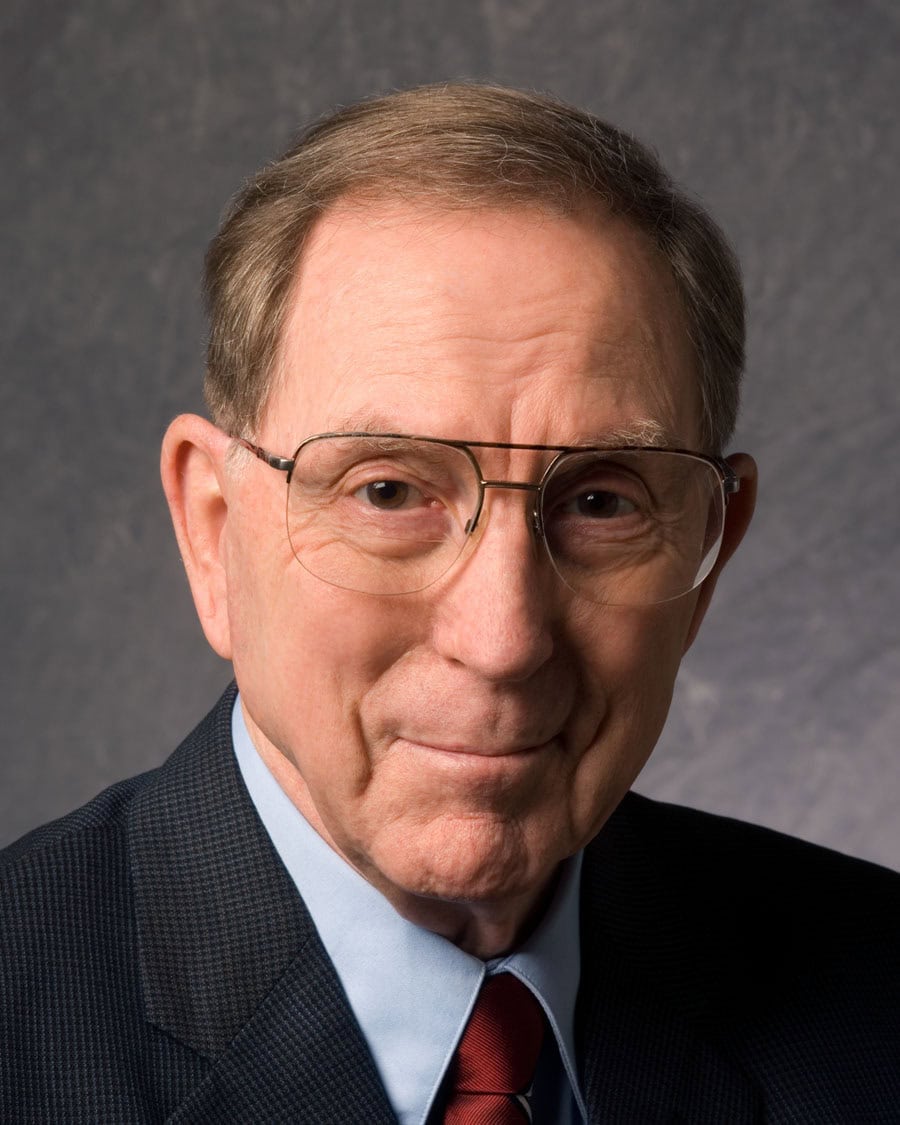
Donn Taylor portraits 12/7/07Q: How did you get your start writing fiction and what genre do you predominantly write in?
A. Since college days I’d always wanted to write a novel, but that ambition (if you can call it that) was always pushed aside by professional requirements and family needs. After I retired from teaching, though, I joined a local writers’ group and began serious attempts to write fiction. The first result, after several years, was The Lazarus File (spies and airplanes in the Caribbean). I write primarily suspense and mystery because they seem most compatible for me.

Q: What does your writing space look like?
A: To be honest, my study looks like Hurricane Ike made a curtain call accompanied by a tornado. I have one of those corner desks with a wing going down each wall. The computer screen goes in the middle at the corner with the keyboard before it and a pair of cheap speakers behind it. On the right wing I have my own books plus Roget’s Thesaurus and a dictionary. Beside them I have my MacAir laptop, and beyond that are small shelves holding a black-and-white laser printer and a multipurpose inkjet. On the left wing are my phone, calendar, a corkboard for handy reference information, and a color book page of flowers that were very nicely colored by a 5-year-old girl in our church.

In a closet without a door is a bookcase holding books of and about literature as well as books about writing.
On the walls are my diplomas, plaques for two awards from the colleges where I taught, an original water color and a Stratford-on-Avon poster from former students, and an 80-second score of “Happy Birthday” arranged for five instruments by a grandson and given to me on my 80th birthday. (He played all the instruments on the recording, and it takes exactly 80 seconds.)

On the window sill are my Army name sign with wings and crossed rifles, a stained glass US made by a son-in-law, the silver cup from my Vietnam unit, a metal bust of Goethe, a Bavarian cowbell given me by the mayor of Leutkirch, Germany, when my aircraft supported the Seventh World Sport Parachute Championships, and a small statue of a monkey sitting on a book by Darwin and contemplating a human skull.

All of that proves nothing except that if you hang around long enough you collect a lot of stuff.
There also are two file cabinets filled with a great deal of junk paperwork that I probably will never need.

Q: In this busy world, how do you find time to connect with God and how does this impact your writing?
A: Honestly, I don’t always make it. From my wife I learned to set aside a time for prayer and reading scripture, usually before I start any serious work for the day. But off and on during the day I do quick prayers, often for people with problems, and I always conclude with prayer at night. Last summer I read Joanne Hillman’s Listening Prayer: Learning to Hear the Shepherd’s Voice, and that added a new dimension to my prayer life.

Q: What part of a writing career do you find most difficult?
A. No question about that. It’s the increasing amount of effort publishers want writers to put into marketing. That takes a lot of time and effort I’d rather spend on writing, and for the most part there’s no way to measure its effectiveness.

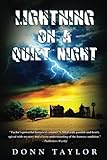
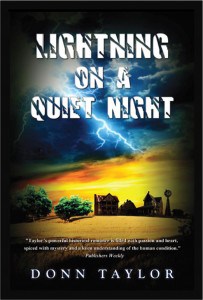
Lightning on a Quiet NightQ: Would you tell us about your current book release, Lightning on a Quiet Night?
A: As a departure from my suspense writing, Lightning is a historical novel set in Northeast Mississippi in 1948 (soon after WW II with the Cold War just getting started). It deals with a small town, too proud of its own virtues, that has to confront its first murder. It has threads of suspense and romance, but these keep reflecting on the town and its self-image vs. the reality of the murder.

Q: Where did you get your inspiration for this story?
A: My parents moved to Northeast Mississippi when I was seventeen, and I quickly came to appreciate the region’s forested hills and its small, fertile valleys. I also appreciated the people—the small-town storekeepers, bankers, and farmers. I began with the idea of bringing in an outsider who has to learn what makes the local people tick. A romance seemed the natural way to develop that kind of dialogue. I’d like to say the Lord took over then, but that would be presumptions. What I’m sure of is that, as I wrote, the story deepened and broadened to become something I hadn’t imagined when I began.

Q: Tell us a little about your main character and how you developed him/her.
A: The male and female leads are coequal. For the male, I wanted a character who represented the kind of ordinary, everyday men who keep doing constructive things without talking about them, and who somehow manage to come through in the clutch. I gave him the ordinary name of Jack Davis.

The female was my outsider from Indiana. I had her bring in some preconceived ideas that had to be adjusted. But I also gave her a capacity for quick empathy and the kind of feminine strength in softness that my wife had.

Q: What did you enjoy most about writing this book? Least?
A: I enjoyed the comedy scenes, but what I most enjoyed was the love scenes. They are somewhat reminiscent of Mildred’s and my courtship during a two-week period when our town was snowbound. However, everything but the snow and the attitudes of the lovers is quite different from our experience. What I liked least? I initially tried to put too much in the first chapter and had to rewrite it upteen times.

Q: What is the main theme or spiritual message of this book?
A: There are two, revealed most concisely in the novel’s two headnotes. From Shakespeare: “‘Tis mad idolatry/To make the service greater than the god.” That is, we can get so intent on virtuous actions that these become more important than the God who created virtue. The second is from Ezekiel (33:12): “The righteousness of the righteous man shall not deliver him in the day of his transgression.” No matter how righteous we are normally, we sooner or later fall into a sin that has to be redeemed by Christ’s sacrifice.

Q: Would you share with us what you are working on now?
A. I’m spending an inordinate amount of time on the trivia of marketing. In writing, I’ve completed a sequel to Rhapsody in Red and begun a sequel to the sequel.

Q: If you could have dinner with 2 people, who would they be?
A. Actually, I’d prefer any of my four children with spouse. But if you mean historical or celebrity persons, I would choose these two, separately: First, the British naval hero Horatio Hornblower. I’d like to ask him how he recovered a large group of European slaves from their African masters without paying a cent or firing a shot. The second person would be the biblical character Zaccheus, the tax collector Jesus called down from the tree. Zaccheus is usually interpreted as having gotten his wealth dishonestly, but I think that’s a bum rap. As I do the math on what he promised Jesus, he had to come by his wealth mostly by honest means, or Jesus would have called him out for lying. I’d like to talk to him about it.

Q: Do you have a favorite hobby?
A. In my younger years I loved competitive basketball and distance running. Later, Mildred and I enjoyed traveling, particularly in mountains. In recent years we settled for classic movies, though now I’m reduced mostly to reading. Studying Cold War history has been a favorite.

Q: What is the most rewarding thing you have ever done?
A. Without question, marrying a Northeast Mississippi girl who taught me the meaning of love and, through example, led me back from disaffection into faith. But if you mean achievements, it would have to be my service in the U.S. Army in the Korean War and Vietnam. It was unspectacular but satisfying.

Q: Where can readers find you on the internet?A. www.donntaylor.com
www.facebook.com/donntaylor;
www.facebook.com/authordonntaylor
www.twitter.com/@donntaylor3
http://dontaylor.blogspot.com/

Q: Anything else you’d like to tell or share with us?
A. I enjoy puns (though Mildred could best me at those), and I like coming up with crazy aphorisms for my Facebook page. Things like: “White bears born with two heads shall be termed bipolar,” or “Witches who rebel will be hexcommunicated.” Check in on my Facebook page and laugh or groan with me.

Donn Taylor interview with Susan Sleeman
February 02, 2015

Donn Taylor portraits 12/7/07Q: How did you get your start writing fiction and what genre do you predominantly write in?
A. Since college days I’d always wanted to write a novel, but that ambition (if you can call it that) was always pushed aside by professional requirements and family needs. After I retired from teaching, though, I joined a local writers’ group and began serious attempts to write fiction. The first result, after several years, was The Lazarus File (spies and airplanes in the Caribbean). I write primarily suspense and mystery because they seem most compatible for me.

Q: What does your writing space look like?
A: To be honest, my study looks like Hurricane Ike made a curtain call accompanied by a tornado. I have one of those corner desks with a wing going down each wall. The computer screen goes in the middle at the corner with the keyboard before it and a pair of cheap speakers behind it. On the right wing I have my own books plus Roget’s Thesaurus and a dictionary. Beside them I have my MacAir laptop, and beyond that are small shelves holding a black-and-white laser printer and a multipurpose inkjet. On the left wing are my phone, calendar, a corkboard for handy reference information, and a color book page of flowers that were very nicely colored by a 5-year-old girl in our church.

In a closet without a door is a bookcase holding books of and about literature as well as books about writing.
On the walls are my diplomas, plaques for two awards from the colleges where I taught, an original water color and a Stratford-on-Avon poster from former students, and an 80-second score of “Happy Birthday” arranged for five instruments by a grandson and given to me on my 80th birthday. (He played all the instruments on the recording, and it takes exactly 80 seconds.)

On the window sill are my Army name sign with wings and crossed rifles, a stained glass US made by a son-in-law, the silver cup from my Vietnam unit, a metal bust of Goethe, a Bavarian cowbell given me by the mayor of Leutkirch, Germany, when my aircraft supported the Seventh World Sport Parachute Championships, and a small statue of a monkey sitting on a book by Darwin and contemplating a human skull.

All of that proves nothing except that if you hang around long enough you collect a lot of stuff.
There also are two file cabinets filled with a great deal of junk paperwork that I probably will never need.

Q: In this busy world, how do you find time to connect with God and how does this impact your writing?
A: Honestly, I don’t always make it. From my wife I learned to set aside a time for prayer and reading scripture, usually before I start any serious work for the day. But off and on during the day I do quick prayers, often for people with problems, and I always conclude with prayer at night. Last summer I read Joanne Hillman’s Listening Prayer: Learning to Hear the Shepherd’s Voice, and that added a new dimension to my prayer life.

Q: What part of a writing career do you find most difficult?
A. No question about that. It’s the increasing amount of effort publishers want writers to put into marketing. That takes a lot of time and effort I’d rather spend on writing, and for the most part there’s no way to measure its effectiveness.

Lightning on a Quiet NightQ: Would you tell us about your current book release, Lightning on a Quiet Night?
A: As a departure from my suspense writing, Lightning is a historical novel set in Northeast Mississippi in 1948 (soon after WW II with the Cold War just getting started). It deals with a small town, too proud of its own virtues, that has to confront its first murder. It has threads of suspense and romance, but these keep reflecting on the town and its self-image vs. the reality of the murder.

Q: Where did you get your inspiration for this story?
A: My parents moved to Northeast Mississippi when I was seventeen, and I quickly came to appreciate the region’s forested hills and its small, fertile valleys. I also appreciated the people—the small-town storekeepers, bankers, and farmers. I began with the idea of bringing in an outsider who has to learn what makes the local people tick. A romance seemed the natural way to develop that kind of dialogue. I’d like to say the Lord took over then, but that would be presumptions. What I’m sure of is that, as I wrote, the story deepened and broadened to become something I hadn’t imagined when I began.

Q: Tell us a little about your main character and how you developed him/her.
A: The male and female leads are coequal. For the male, I wanted a character who represented the kind of ordinary, everyday men who keep doing constructive things without talking about them, and who somehow manage to come through in the clutch. I gave him the ordinary name of Jack Davis.

The female was my outsider from Indiana. I had her bring in some preconceived ideas that had to be adjusted. But I also gave her a capacity for quick empathy and the kind of feminine strength in softness that my wife had.

Q: What did you enjoy most about writing this book? Least?
A: I enjoyed the comedy scenes, but what I most enjoyed was the love scenes. They are somewhat reminiscent of Mildred’s and my courtship during a two-week period when our town was snowbound. However, everything but the snow and the attitudes of the lovers is quite different from our experience. What I liked least? I initially tried to put too much in the first chapter and had to rewrite it upteen times.

Q: What is the main theme or spiritual message of this book?
A: There are two, revealed most concisely in the novel’s two headnotes. From Shakespeare: “‘Tis mad idolatry/To make the service greater than the god.” That is, we can get so intent on virtuous actions that these become more important than the God who created virtue. The second is from Ezekiel (33:12): “The righteousness of the righteous man shall not deliver him in the day of his transgression.” No matter how righteous we are normally, we sooner or later fall into a sin that has to be redeemed by Christ’s sacrifice.

Q: Would you share with us what you are working on now?
A. I’m spending an inordinate amount of time on the trivia of marketing. In writing, I’ve completed a sequel to Rhapsody in Red and begun a sequel to the sequel.

Q: If you could have dinner with 2 people, who would they be?
A. Actually, I’d prefer any of my four children with spouse. But if you mean historical or celebrity persons, I would choose these two, separately: First, the British naval hero Horatio Hornblower. I’d like to ask him how he recovered a large group of European slaves from their African masters without paying a cent or firing a shot. The second person would be the biblical character Zaccheus, the tax collector Jesus called down from the tree. Zaccheus is usually interpreted as having gotten his wealth dishonestly, but I think that’s a bum rap. As I do the math on what he promised Jesus, he had to come by his wealth mostly by honest means, or Jesus would have called him out for lying. I’d like to talk to him about it.

Q: Do you have a favorite hobby?
A. In my younger years I loved competitive basketball and distance running. Later, Mildred and I enjoyed traveling, particularly in mountains. In recent years we settled for classic movies, though now I’m reduced mostly to reading. Studying Cold War history has been a favorite.

Q: What is the most rewarding thing you have ever done?
A. Without question, marrying a Northeast Mississippi girl who taught me the meaning of love and, through example, led me back from disaffection into faith. But if you mean achievements, it would have to be my service in the U.S. Army in the Korean War and Vietnam. It was unspectacular but satisfying.

Q: Where can readers find you on the internet?A. www.donntaylor.com
www.facebook.com/donntaylor;
www.facebook.com/authordonntaylor
www.twitter.com/@donntaylor3
http://dontaylor.blogspot.com/

Q: Anything else you’d like to tell or share with us?
A. I enjoy puns (though Mildred could best me at those), and I like coming up with crazy aphorisms for my Facebook page. Things like: “White bears born with two heads shall be termed bipolar,” or “Witches who rebel will be hexcommunicated.” Check in on my Facebook page and laugh or groan with me.

Interviewer Info

Susan Sleeman
SUSAN SLEEMAN is a bestselling and award-winning author of more than 25 inspirational/Christian and clean read romantic suspense books.
[ Read full bio ]

About Donn Taylor

Donn TaylorDonn Taylor led an Infantry rifle platoon in the Korean War, served with Army aviation in Vietnam, and worked with air reconnaissance in Europe and Asia. Afterwards, he earned a PhD in English literature (Renaissance) and for eighteen years taught literature at two liberal arts colleges. His poetry  is collected in his book Dust and Diamond: Poems of Earth and Beyond. His fiction includes a light-hearted mystery, Rhapsody in Red, and it sequel, Murder Mezzo Forte. He has also published a historical novel, Lightning on a Quiet Night (a Selah Awards finalist), and two suspense novels, Deadly Addictive and The Lazarus File. He is a frequent speaker at writers’ groups and conferences. He lives near Houston, TX, where he continues to write fiction and poetry, as well as essays on writing, ethical issues, and U.S. foreign policy.
Author's BlogAuthor's WebsiteFacebookTwitter

 
Recent books by Donn Taylor

Murder Mezzo Forte (Preston Barclay)
Release date: 06/07/2016

  • Paperback


Lightning on a Quiet Night
Release date: 11/03/2014

  • Paperback


Deadly Additive
Release date: 09/07/2012

  • Paperback


Rhapsody in Red
Release date: 09/01/2008

  • Paperback


OUR REVIEWS
Review – Murder Mezzo Forte
Review – Lightning on a Quiet Night
Review – Deadly Additive
INTERVIEWS
November 09, 2008
December 17, 2012
February 02, 2015
June 20, 2016


Filed Under: Author Interviews, Blog

Bestselling Steele Guardians series by Top Christian romantic suspense, author Susan Sleemaan


Support Us
Join Our Mailing List

Thank you for stopping by The Suspense Zone, your one-stop site to preview Christian and Clean Read Suspense and mystery books.

Christian Romantic Suspense Author Susan Sleeman

Your host, bestselling Christian romantic suspense author, Susan Sleeman has gathered thousands of Christian romantic suspense, mystery, and suspense books by the best Christian authors for your enjoyment.

With over two million books in print. top Christian romantic suspense author Susan Sleeman has published over 60 books. Her bestselling series include:

Lost Lake Locators
Shadow Lake Survival
Steele Guardians
Nighthawk Security
Homeland Heroes
Truth Seekers
Cold Harbor
White Knights
Agents Under Fire
Read more about Susan's edge of your seat romantic suspense books at her website.

Brought to you by top Christian romantic suspense, author Susan Sleeman.

Copyright © 2026 · TheSuspenseZone.com • Susan Sleeman