Riptide
  • Home
  • Blog
  • All Books
    • New Releases
      • Kindle
      • Print
    • Upcoming
      • Kindle
      • Print
    • By Title
      • Kindle
      • Print
    • By Author
      • Kindle
      • Print
  • Romantic Suspense
    • New Releases
      • Kindle
      • Print
    • Upcoming
      • Kindle
      • Print
    • By Title
      • Kindle
      • Print
    • By Author
      • Kindle
      • Print
  • Mysteries
    • New Releases
      • Kindle
      • Print
    • Upcoming
      • Kindle
      • Print
    • By Title
      • Kindle
      • Print
    • By Author
      • Kindle
      • Print
  • Reviews
    • By Title
    • By Author
  • Authors
    • Bios
    • Interviews
  • About
    • Privacy Policy
    • Cookies Policy
    • Contact Us
    • Blog
  • For Authors
Lost Lake

James R. Hannibal Interview

May 10, 2021 By The Suspense Zone

Q: As a former tactical deception officer and stealth pilot, you are very familiar with the world you are writing about. Can you relay how your experiences have helped you write The Paris Betrayal?
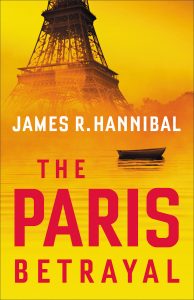
A: I played around in various levels of shadow my whole career, from the gray edges to full black. In a career like that, you meet some interesting people. Since this book draws from a biblical story in which one man receives a great volume of advice, I sought to bring in the advice those real-world characters had given me. I also brought in my own expertise, all the lessons learned and little tricks. The end result is almost a primer on spycraft. I tried to place the reader inside Ben’s head as he dredges up every ounce of  knowledge and training to survive this harshest of circumstances—a spy betrayed by his own agency.

Q:  What was the inspiration behind The Paris Betrayal?
A: This story was born in a Sunday school class. We were studying Job. While listening to the debate between God and Satan, Job suffering unjust accusations from his friends, I began to see the entire story as that of a spy left out in the cold. In the grand scheme, even the greatest Kingdom warrior among us lives and dies to serve God’s plan. He is sovereign. We are cogs. His creations, to do with us as He pleases. When a soldier or spy signs his or her life away on the dotted line, we agree to become much the same. So, I set out to create a new story in which a spy at the top of his game comes to that realization.

Q: The Paris Betrayal includes underlying themes of betrayal, loyalty, and enduring faith in hard times. Can you elaborate on how this played out in your novel?
A: Job felt betrayed by God. He questioned God. Yet, at the same time, he remained steadfastly loyal to God. I can tell you that at times, my family and I felt betrayed by the military. We grumbled. We questioned. But, like Job, we remained loyal, because we understood that the needs of the service ultimately outweighed our own. I placed the same loyalty in Ben. Even when they shut him out, he trusts the Company. He trusts the Director. And that trust informs all his actions leading up to the point where he must choose between fighting for his own restoration and good name or fighting to save thousands of lives.

Q: In your new novel, you write about a bioweapon. What type of research was required to accurately portray the devastating effects of this type of weapon?
A: The bio weapon concept came from Job’s boils, which I likened to a doctored version of a plague. Sadly, I wound up needing less research than I should have. Nearing completion of the manuscript, China—either wittingly or unwittingly—unleashed COVID-19 upon the world. Bits of my research like R naught (a disease’s potential for rapid spread) appeared on the news. This prompted a major rewrite to avoid traumatizing readers by rehashing their recent suffering. Ben, at least, was dealing with a bacteria rather than a virus, so there were inherent differences. And the delivery system was unique, designed for far more rapid spread. I thought, At least this big ship bomb I’ve created won’t look familiar after everything else 2020 dished out. Then, two months after I gave my book to the publisher, a warehouse holding a shipload of ammonium nitrate exploded—one of the largest non-nuclear blasts in history—and destroyed the Beirut docks.

Q: What do you hope readers gain from reading your book?
A: I write each story with two takeaways in mind—an entertainment takeaway and a love takeaway. For this book, both takeaways were my biggest challenges yet. For entertainment, I wanted to work a “spycraft primer” into the story without sacrificing the characters or making it sound like a textbook. I hope I pulled it off. The love takeaway was even harder. How do you show the combination of God’s love and His absolute sovereignty without ever mentioning God (because the story is allegorical). There’s no scene where a pastor explains the meaning of the book of Job and no scene where Ben cracks open a Bible and a great big light bulb above his head flickers on. So I built it all into the relationships. I hope that my readers, like readers of Job, find in this story the harsh reality of the Director’s sovereignty over Ben softened by his love for his favorite spy. And I hope they see that same complex connection between their Creator and themselves.

Q: When did you decide to write your first novel?
A: I had wanted to write a novel for most of my life, but I didn’t get to it until three tragedies happened in quick succession. I lost a good friend in a fighter aircraft training accident. September 11, 2001, followed. And a few months later, a former squadron mate died in another fighter training accident. It was all too much, I think, and I had to put it all down. That became the novel Wraith, which was a sort of catharsis. I toyed with it for years before a small independent publisher finally picked it up in 2010. Why did you choose to write in your particular genre? I write in several genres, but spy thrillers are my home territory. They say, “Write what you know,” right?

Q: What are you working on next?
A: Two stories are coming up, a procedural mystery set in Hawaii and a fantasy set in a world originally created in the 1980s by one of my mentors. I’m super-excited about both, but I’ll focus on the mystery, here. A few years back, I took my family to a beach resort. A bunch of doctors were there getting a “certification” (air quotes). I discovered this is a thing. Big resorts sponsor these “training events” for doctors. The whole thing is a win-win boondoggle for the resort and the docs, in which very little actual training takes place (I snooped around a little to confirm this). But what if there was one particularly stuffy British doctor who’d been forced by his boss to attend? He’s the one guy who doesn’t want to be there. And what if, while he’s walking alone on the beach one night, avoiding his reveling colleagues, a woman about to breathe her last washes up at his feet? These are the thoughts that waft through an author’s mind when he’s supposed to be on vacation.

Q: How can readers connect with you?
A: Readers can most easily connect with me on social media via Facebook, Instagram, or Twitter, simply by searching for James R. Hannibal.

James R. Hannibal interview with Susan Sleeman
May 10, 2021

Q: As a former tactical deception officer and stealth pilot, you are very familiar with the world you are writing about. Can you relay how your experiences have helped you write The Paris Betrayal?
A: I played around in various levels of shadow my whole career, from the gray edges to full black. In a career like that, you meet some interesting people. Since this book draws from a biblical story in which one man receives a great volume of advice, I sought to bring in the advice those real-world characters had given me. I also brought in my own expertise, all the lessons learned and little tricks. The end result is almost a primer on spycraft. I tried to place the reader inside Ben’s head as he dredges up every ounce of  knowledge and training to survive this harshest of circumstances—a spy betrayed by his own agency.

Q:  What was the inspiration behind The Paris Betrayal?
A: This story was born in a Sunday school class. We were studying Job. While listening to the debate between God and Satan, Job suffering unjust accusations from his friends, I began to see the entire story as that of a spy left out in the cold. In the grand scheme, even the greatest Kingdom warrior among us lives and dies to serve God’s plan. He is sovereign. We are cogs. His creations, to do with us as He pleases. When a soldier or spy signs his or her life away on the dotted line, we agree to become much the same. So, I set out to create a new story in which a spy at the top of his game comes to that realization.

Q: The Paris Betrayal includes underlying themes of betrayal, loyalty, and enduring faith in hard times. Can you elaborate on how this played out in your novel?
A: Job felt betrayed by God. He questioned God. Yet, at the same time, he remained steadfastly loyal to God. I can tell you that at times, my family and I felt betrayed by the military. We grumbled. We questioned. But, like Job, we remained loyal, because we understood that the needs of the service ultimately outweighed our own. I placed the same loyalty in Ben. Even when they shut him out, he trusts the Company. He trusts the Director. And that trust informs all his actions leading up to the point where he must choose between fighting for his own restoration and good name or fighting to save thousands of lives.

Q: In your new novel, you write about a bioweapon. What type of research was required to accurately portray the devastating effects of this type of weapon?
A: The bio weapon concept came from Job’s boils, which I likened to a doctored version of a plague. Sadly, I wound up needing less research than I should have. Nearing completion of the manuscript, China—either wittingly or unwittingly—unleashed COVID-19 upon the world. Bits of my research like R naught (a disease’s potential for rapid spread) appeared on the news. This prompted a major rewrite to avoid traumatizing readers by rehashing their recent suffering. Ben, at least, was dealing with a bacteria rather than a virus, so there were inherent differences. And the delivery system was unique, designed for far more rapid spread. I thought, At least this big ship bomb I’ve created won’t look familiar after everything else 2020 dished out. Then, two months after I gave my book to the publisher, a warehouse holding a shipload of ammonium nitrate exploded—one of the largest non-nuclear blasts in history—and destroyed the Beirut docks.

Q: What do you hope readers gain from reading your book?
A: I write each story with two takeaways in mind—an entertainment takeaway and a love takeaway. For this book, both takeaways were my biggest challenges yet. For entertainment, I wanted to work a “spycraft primer” into the story without sacrificing the characters or making it sound like a textbook. I hope I pulled it off. The love takeaway was even harder. How do you show the combination of God’s love and His absolute sovereignty without ever mentioning God (because the story is allegorical). There’s no scene where a pastor explains the meaning of the book of Job and no scene where Ben cracks open a Bible and a great big light bulb above his head flickers on. So I built it all into the relationships. I hope that my readers, like readers of Job, find in this story the harsh reality of the Director’s sovereignty over Ben softened by his love for his favorite spy. And I hope they see that same complex connection between their Creator and themselves.

Q: When did you decide to write your first novel?
A: I had wanted to write a novel for most of my life, but I didn’t get to it until three tragedies happened in quick succession. I lost a good friend in a fighter aircraft training accident. September 11, 2001, followed. And a few months later, a former squadron mate died in another fighter training accident. It was all too much, I think, and I had to put it all down. That became the novel Wraith, which was a sort of catharsis. I toyed with it for years before a small independent publisher finally picked it up in 2010. Why did you choose to write in your particular genre? I write in several genres, but spy thrillers are my home territory. They say, “Write what you know,” right?

Q: What are you working on next?
A: Two stories are coming up, a procedural mystery set in Hawaii and a fantasy set in a world originally created in the 1980s by one of my mentors. I’m super-excited about both, but I’ll focus on the mystery, here. A few years back, I took my family to a beach resort. A bunch of doctors were there getting a “certification” (air quotes). I discovered this is a thing. Big resorts sponsor these “training events” for doctors. The whole thing is a win-win boondoggle for the resort and the docs, in which very little actual training takes place (I snooped around a little to confirm this). But what if there was one particularly stuffy British doctor who’d been forced by his boss to attend? He’s the one guy who doesn’t want to be there. And what if, while he’s walking alone on the beach one night, avoiding his reveling colleagues, a woman about to breathe her last washes up at his feet? These are the thoughts that waft through an author’s mind when he’s supposed to be on vacation.

Q: How can readers connect with you?
A: Readers can most easily connect with me on social media via Facebook, Instagram, or Twitter, simply by searching for James R. Hannibal.

Interviewer Info

Susan Sleeman
SUSAN SLEEMAN is a bestselling and award-winning author of more than 25 inspirational/Christian and clean read romantic suspense books.
[ Read full bio ]

About James R. Hannibal

 
Recent books by James R. Hannibal

The Paris Betrayal
Release date: 05/04/2021

  • Paperback
  • Kindle Edition
Book Preview


INTERVIEWS
May 10, 2021


Filed Under: Author Interviews, Blog

Bestselling Steele Guardians series by Top Christian romantic suspense, author Susan Sleemaan


Support Us
Join Our Mailing List

Thank you for stopping by The Suspense Zone, your one-stop site to preview Christian and Clean Read Suspense and mystery books.

Christian Romantic Suspense Author Susan Sleeman

Your host, bestselling Christian romantic suspense author, Susan Sleeman has gathered thousands of Christian romantic suspense, mystery, and suspense books by the best Christian authors for your enjoyment.

With over two million books in print. top Christian romantic suspense author Susan Sleeman has published over 60 books. Her bestselling series include:

Lost Lake Locators
Shadow Lake Survival
Steele Guardians
Nighthawk Security
Homeland Heroes
Truth Seekers
Cold Harbor
White Knights
Agents Under Fire
Read more about Susan's edge of your seat romantic suspense books at her website.

Brought to you by bestselling Christian romantic suspense, author Susan Sleeman.

Copyright © 2026 · TheSuspenseZone.com • Susan Sleeman